Back to Articles
Wellness 7 min read Jan 2026

Balance, Mobility, and Longevity: What Two Simple Tests Can Tell Us About Your Health

What if two quick movement tests could provide important clues about your future health and independence? Recent research has highlighted the value of simple functional assessments that require no expensive equipment and take only seconds to perform.
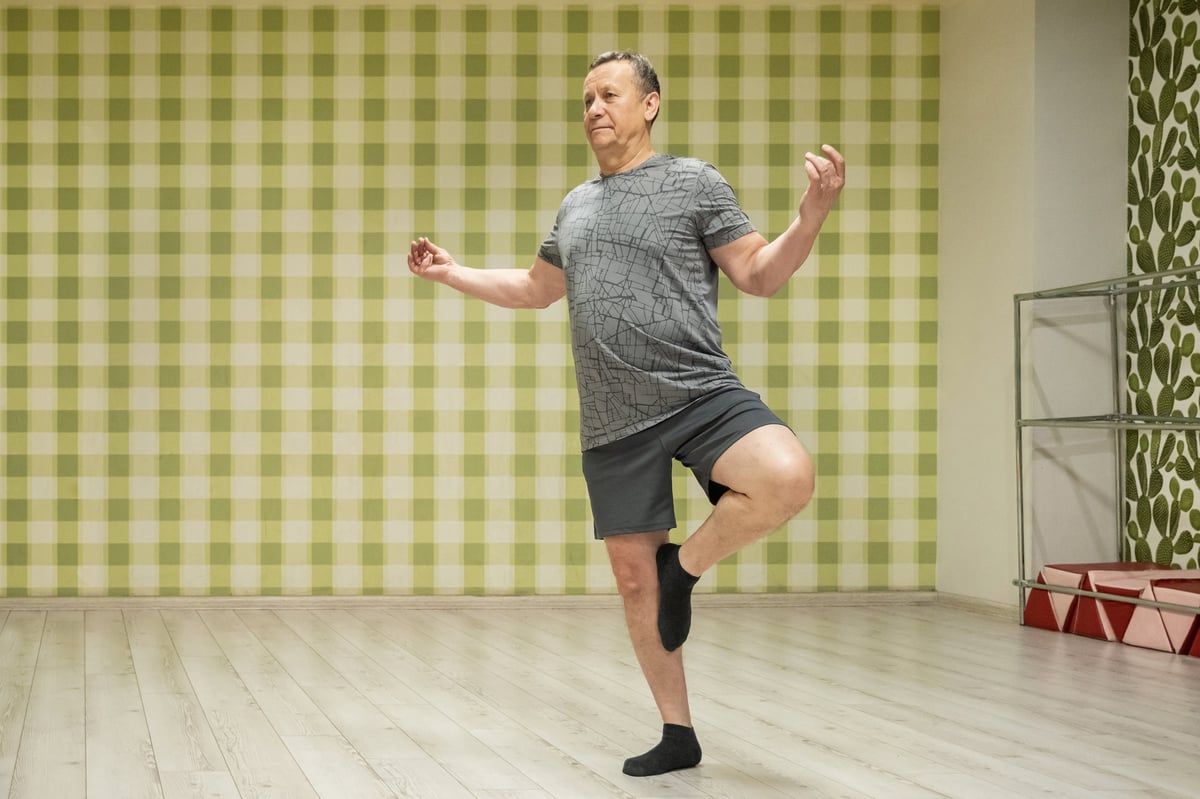
Holding tree pose adult caucasian man balancing in indoor fitness studio facing mirror improving stability concentration and body alignment after work

Recent research has highlighted the value of simple functional assessments that require no expensive equipment and take only seconds to perform. Two such tests: the Single-Leg Balance Test and the Sitting-Rising Test (SRT) are gaining attention for their ability to reflect overall physical function and potentially, long-term health outcomes.

While neither test can predict an individual's lifespan, both offer valuable insights into balance, strength, mobility, and resilience.

The Single-Leg Balance Test: More Than Just Standing Still

The Single-Leg Balance Test evaluates a person's ability to maintain stability while standing on one leg. Originally studied in sports medicine to identify athletes at increased risk of ankle injuries, researchers found that poor single-leg balance was associated with a significantly greater risk of future longevity concerns.

More recently, balance assessments have attracted attention as markers of healthy aging. Studies suggest that difficulty maintaining balance may reflect declines in muscle strength, neuromuscular control, sensory function, and coordination: all important components of physical independence.

Why It Matters

For Patients

  • Balance is essential for everyday activities such as climbing stairs, getting dressed, and preventing falls.
  • Poor balance may indicate areas where targeted exercise can improve function and confidence.

For Clinicians

  • Single-leg balance testing provides a quick, low-cost functional screening tool.
  • It may help identify individuals who could benefit from balance training, strength programs, or fall prevention interventions.

The Sitting-Rising Test: A Window Into Overall Fitness

The Sitting-Rising Test (SRT), recently highlighted in a study involving more than 4,000 adults aged 46–75 years, measures how easily a person can sit on the floor and stand back up using minimal support.

The test assesses multiple aspects of physical fitness simultaneously: lower-body strength, flexibility, balance, mobility, coordination, and body control. Participants receive a score out of 10, with points deducted for using hands, knees, or other supports while sitting down or standing up.

Researchers found that individuals with the highest scores experienced substantially lower rates of death from natural and cardiovascular causes over approximately 12 years of follow-up. Importantly, the test reflects overall physical capability rather than serving as a direct predictor of lifespan.

For Patients

  • The SRT can reveal opportunities to improve strength, flexibility, and balance.
  • It highlights the importance of maintaining functional fitness as we age.

For Clinicians

  • The test offers a practical way to assess non-aerobic fitness.
  • It complements traditional measures such as blood pressure, weight, and cardiovascular risk factors.

Comparing the Two Tests

Both tests are simple, inexpensive, and easy to perform in clinical and community settings.

Single-Leg Balance Test Sitting-Rising Test
Focuses primarily on balance and postural control Assesses balance, strength, flexibility, and coordination
Commonly used in sports medicine and fall-risk assessment Evaluates overall functional fitness
Can identify injury risk and balance deficits Associated with long-term health and longevity outcomes
Takes approximately 10 seconds Takes less than a minute

The Bigger Message

Neither test should be viewed as a "pass-or-fail" assessment of health or longevity. Instead, they serve as valuable snapshots of physical function.

The encouraging news is that the qualities these tests measure — balance, strength, mobility, and flexibility — can often be improved through regular physical activity, targeted exercise programs, and Physiotherapy.

For many people, improving balance may involve:

"Small improvements in physical function today may translate into greater independence, reduced injury risk, and better quality of life in the future."

Take-Home Points

For Patients

Simple movement tests can reveal important information about your physical health. If you struggle with balance or rising from the floor, consider discussing it with a Physiotherapist or a healthcare professional. These skills can often be improved through appropriate exercise and rehabilitation.

For Healthcare Professionals

Functional movement assessments provide valuable information beyond traditional vital signs and laboratory measures. Incorporating simple tests such as the Single-Leg Balance Test and Sitting-Rising Test may help identify patients who would benefit from early intervention aimed at preserving mobility, preventing falls, and promoting healthy aging. Physiotherapy is the best option for anyone with balance or complex issues.

Healthy aging is not just about adding years to life. It is about maintaining the strength, balance, and mobility to enjoy those years fully.

Sources

  • Research on the Sitting-Rising Test and longevity was reported in Medscape and based on a large longitudinal study published in 2025.
  • British Journal of Sports Medicine research supports the use of single-leg balance testing as a reliable measure of balance-related risk and physical function.